Born a Crime — VCE analysis
by Trevor Noah · guide written by Yahav Ben Yosef (raw 50 English, 99+ ATAR)
Trevor Noah's memoir looks like a comedy until you notice how carefully it is built. Students who write about it well stop treating it as a series of funny anecdotes and start treating it as an argument about identity, language and the machinery of apartheid.
The themes that actually earn marks
Language as power
Noah's multilingualism is not a personality quirk — it is survival. He moves between Xhosa, Zulu, Afrikaans and English to become insider rather than outsider. The strongest essays treat language as the memoir's central instrument of belonging.
Identity and in-betweenness
Born to a Black mother and a white father under a system that made his existence illegal, Noah is never fully inside any group. That structural loneliness, not his humour, is the memoir's emotional spine.
Patricia's faith and defiance
His mother is the moral centre. Her religious conviction and her refusal to live as though apartheid were permanent shape Noah's sense of what is possible — and the memoir's ending forces the reader to weigh her strength against the violence she endures.
Crime, poverty and choice
Noah is careful never to reduce the hustlers of Alexandra to criminals. He shows how limited options manufacture crime, which is what turns an anecdote about selling pirated CDs into social analysis.
How to write about Born a Crime
Anchor every contention in the memoir's structure. Noah opens chapters with a short historical or political framing before the personal story — quoting that framing alongside the anecdote it introduces shows an assessor you understand the text as a constructed argument rather than a life story.
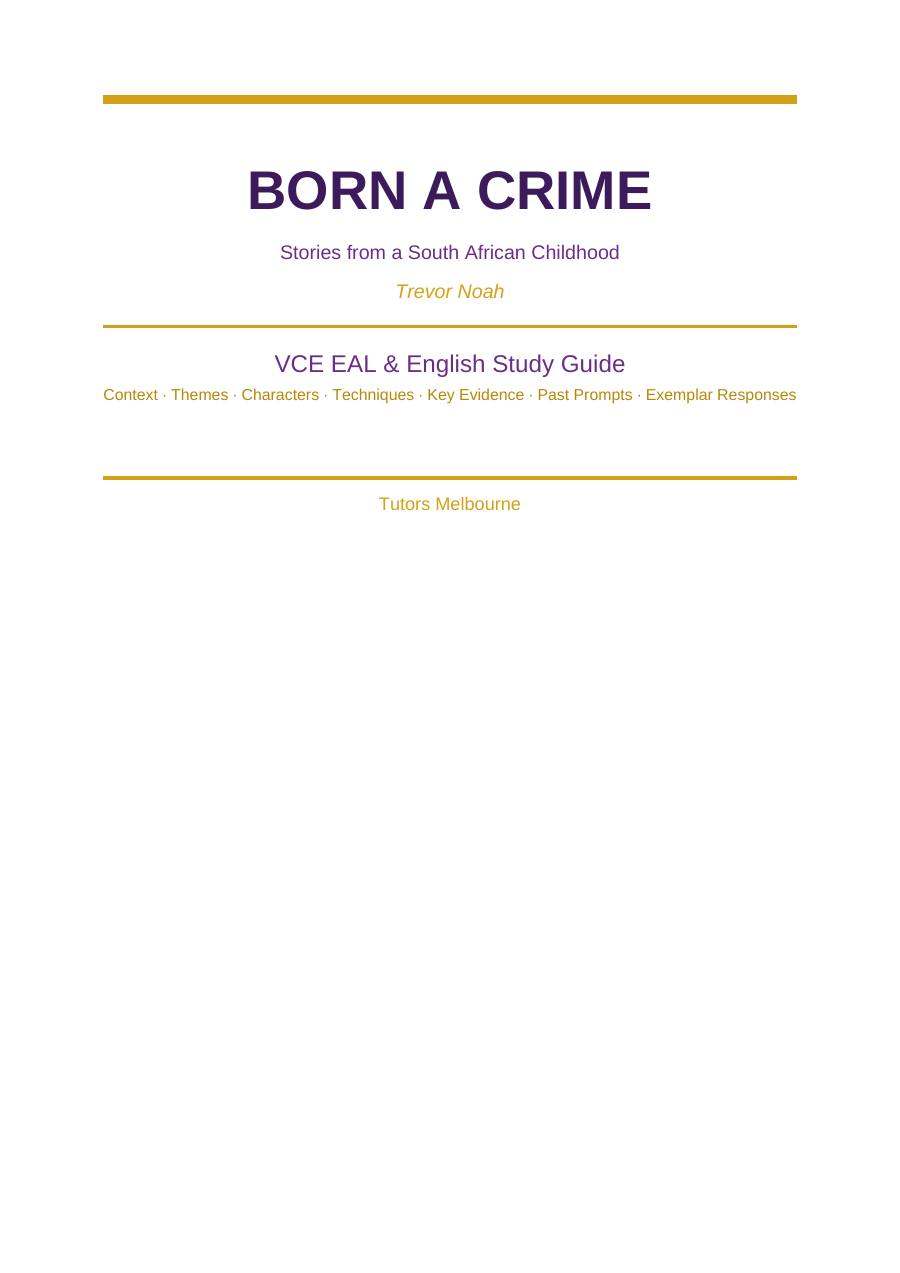
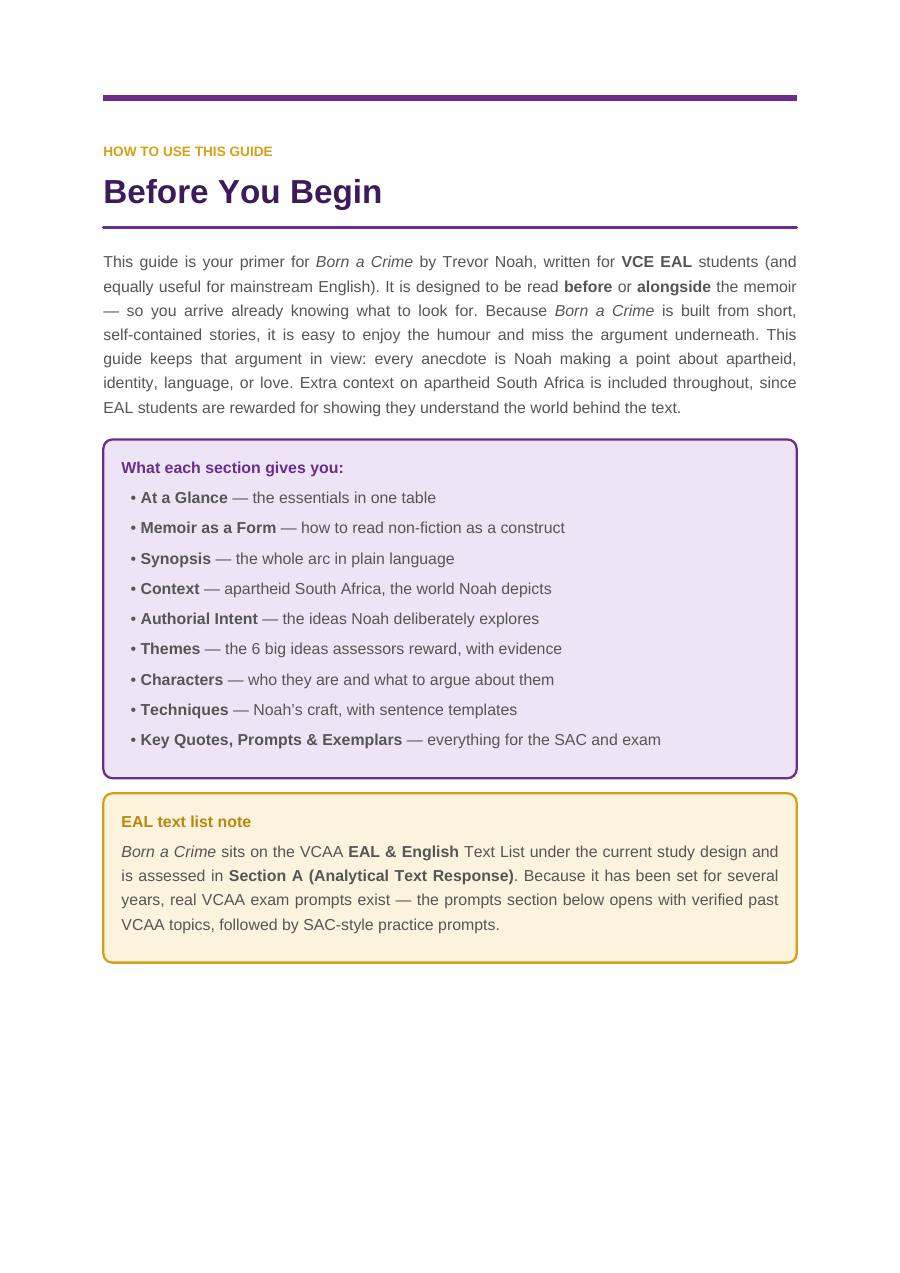
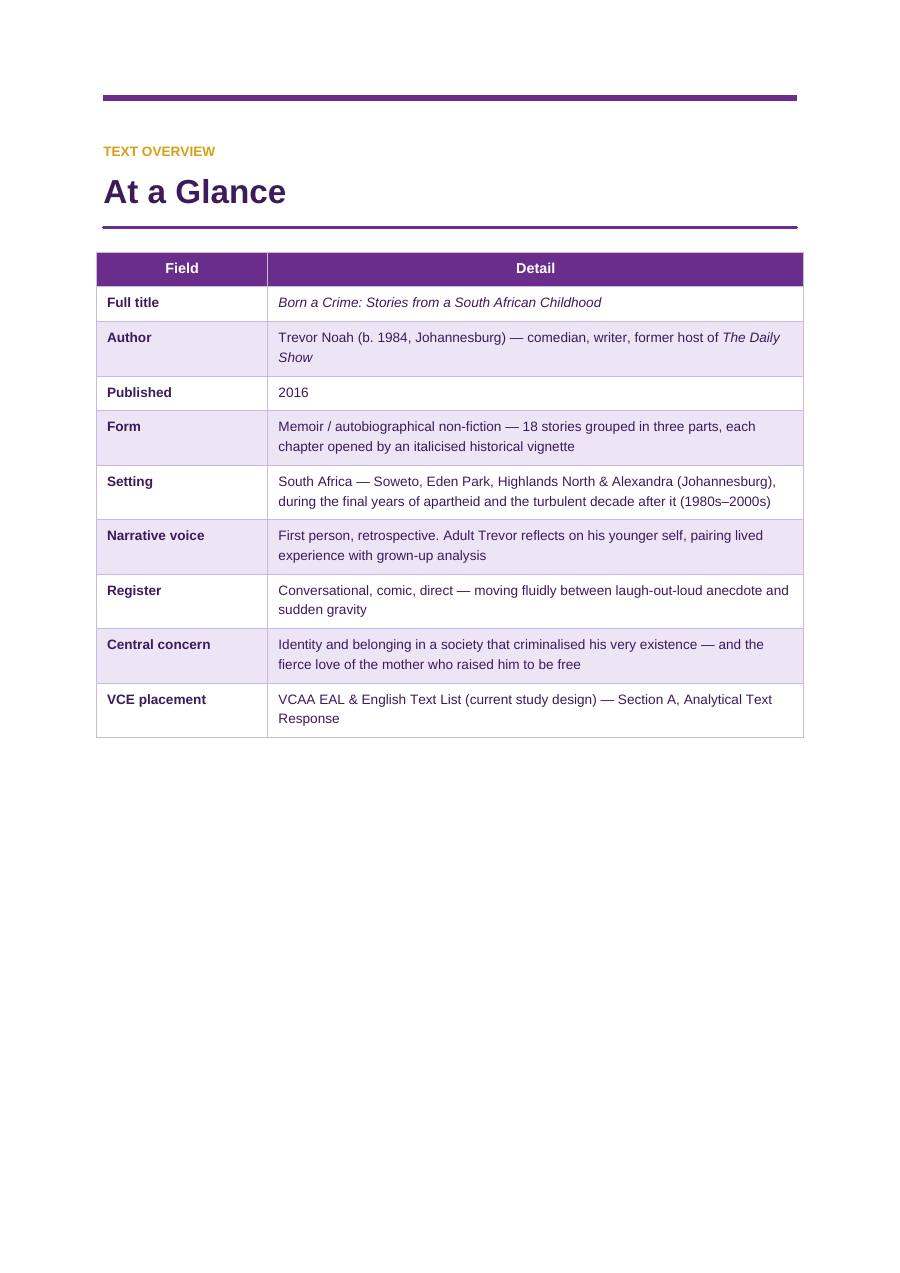
Read the first 3 pages, free
This is the actual 19-page guide our students study from — no email required. The full guide comes with a class spot.
Born a Crime — common questions
What are the main themes in Born a Crime?
Language as power and belonging, identity and in-betweenness, Patricia's faith and defiance, and the way poverty manufactures crime. The strongest essays treat the memoir as an argument about apartheid rather than a set of funny anecdotes.
Is Born a Crime studied in English or EAL?
Both — it is a common text for Units 3–4 English and EAL. We teach it in our small group classes with the text response task in mind.
How do I quote a memoir in a text response?
Pair Noah's historical framing at the start of a chapter with the personal anecdote it introduces. Quoting both shows you understand the memoir's structure, which is where marks sit.
We teach Born a Crime in our year 12 english tutoring classes — small groups, weekly marked essays, and the full guide included. You can also read our essay technique articles or see the class pricing.